
What is add-a-thou paste?
Add-a-thou paste is the imaginary shortcut for a dimension cut undersize. A thou means a thousandth of an inch in the usage here. The fictional paste promises to add that missing amount back as if precise dimensional repair were a universal stores consumable.
Real coating, deposition and rework processes exist. Their existence does not validate every casual promise to restore a part with a dab from an unspecified tin. The add-a-thou explanation focuses on the invented universal repair and keeps actual processes separate.
An original light reply is “Does it come with the missing measurement?” For a literal task, ask which approved process and specification are meant. Learning the phrase does not decide whether an actual workpiece can be recovered. That question belongs to the person responsible for the part and its requirements.
Can a hole relocator move a misplaced hole?
The joke promises to move an existing hole while leaving the surrounding material otherwise unchanged. A hole is a feature in that material, rather than an object that can be lifted out and placed elsewhere. The tool name skips over the physical consequences.
Repair and rework can be genuine possibilities in a particular application. Calling the joke imaginary is not a verdict on every engineering repair. The hole-relocator entry identifies the magical claim and distinguishes it from a specified process.
A useful quiz asks “What happens to the material around the old position?” The question exposes what the fictional name leaves unanswered. “I found the coordinates; the moving tool is still fictional” is an original conversational reply. No rework experiment or workpiece handling is necessary to deliver the explanation.
Why 8/16 is a real size with a wordplay setup
Eight sixteenths is equal to one half. The joke gives a familiar fraction an unfamiliar-looking name and lets the listener imagine a separate tool size. It is different from add-a-thou paste: the stated dimension is genuine.
The eight-sixteenths-wrench entry explains the arithmetic before the punchline. Dividing both the numerator and denominator by eight gives one half. A labelled half-inch size expresses the same nominal fraction, though actual tool selection still depends on the fastener and equipment.
Ask “Is that the half-inch size?” That is a clear answer rather than a claim that every wrench with a matching number fits every application. A group quiz can pair 8/16 with 1/2 and ask which label sounds more like a special order. The reveal is fraction simplification, not a tool-use instruction.
Neutral drill bits and real cutting directions
The neutral-drill-bit request invents a third ordinary option between left- and right-hand cutting drills. The wording borrows a familiar three-position pattern and applies it where the tool’s cutting geometry needs an actual specification.
Left-hand drill bits are real. That exception makes a blanket “all unusual drill names are fake” rule unreliable. The left-hand drill entry and neutral-drill explanation distinguish the genuine cutting-direction term from the fictional neither-direction request.
Ask which cutting tool and machine the requester means. A real designation is evidence; a sequence of increasingly invented adjectives is a conversational clue. The genuine exception is not a suggestion to reverse a machine or improvise a setup. This guide explains names, while the actual application needs its own instructions.
Measuring equipment makes a useful genuine comparison
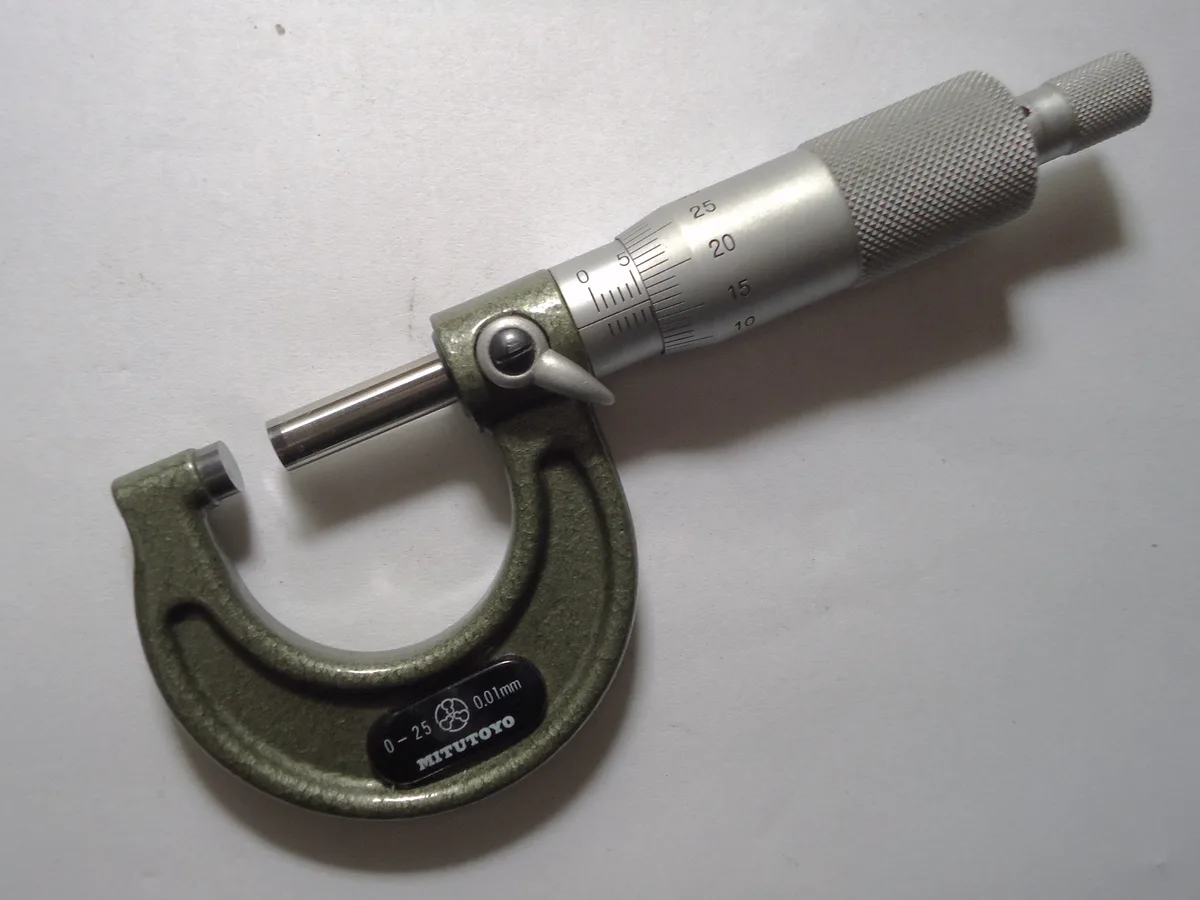
The accompanying Wikimedia Commons photograph shows a genuine micrometer. It provides a visual contrast with imaginary dimensional repairs: measuring a feature and restoring missing material are different claims. The photograph is credited to Mauro Cateb and is not presented as a picture of an apprentice being pranked.
An ordinary rubber mallet also supplies a useful contrast. Its striking face is not a cutting edge to sharpen like a chisel. The rubber-mallet-sharpener entry explains the fake maintenance category without prescribing a repair to a real tool.
For a short quiz, ask which example is an invented consumable, which promises a magical move, and which is just an equivalent fraction. The answers are add-a-thou paste, hole relocator and 8/16. Explore machinist apprentice jokes and real tools that sound fake for the related exceptions. Giving the answers promptly lets everyone enjoy the language and return to precise work instructions.




Worked examples: names and explanations
Quick answers to the names in this guide. Each entry has the full explanation, alternative names and a comeback.
Add-a-thou paste
Add-a-thou paste is a machine-shop joke about restoring a thousandth of an inch to a dimension that was cut undersize. Real coating, deposition and repair processes exist; a universal dab of imaginary precision paste is not one of them.
A useful question: Ask what approved process restores the feature. “A dab of paste” is no substitute for a drawing and a quality decision.
Hole relocator
A hole relocator that moves an existing hole without altering the surrounding material is a fake tool. Repairing or reworking a misplaced feature can be possible, but it is an actual process, not the magical relocation the joke promises.
A useful question: Ask for the approved rework process rather than a travelling hole. A genuine quality decision deserves a literal answer.
Eight-sixteenths wrench
Eight sixteenths of an inch equals half an inch. The joke asks you to search for an unfamiliar-sounding size while an equivalent half-inch tool may already be available. The dimension is real; the extra search can be unnecessary.
A useful question: Reduce the fraction or ask for the usual size name. Eight divided by sixteen is one half.
Original editorial guide. Reviewed 2026-10-05. Corrections are welcome.