- CATALOGUE TYPE
- Fake fluids
- TRADE CONTEXT
- Mechanic
- ALSO ASKED FOR AS
- turn signal fluid, indicator fluid, headlight fluid, taillight fluid, blinker fluide
How the joke works
Cars do have real fluids, and a beginner learning maintenance hears about reservoirs all the time. “Blinker fluid” borrows that vocabulary and gives another familiar component a nonexistent bottle. The label sounds much more official than the mechanism behind it.
A turn signal’s light output and flashing behaviour involve electrical components and controls. The system is not lubricated or refilled through the lamp. A novelty bottle sold with this name is merchandise illustrating the joke, not evidence of a vehicle service requirement.
Moisture in a lamp is not blinker fluid. If someone actually reports water inside an assembly or a failed indicator, that is a real fault for a competent person to assess. The joke should never become an instruction to pour anything into a vehicle.
Blinker, indicator and turn signal are alternative names in these automotive jokes. Requests for headlight fluid or taillight fluid invent the same sort of refill system; the different lamp names do not make the fluid real.
This is a recognition joke as much as an errand. It works in a conversation about a fictional parts order or a clearly labelled humour card, without involving a real car. The real workshop should retain its usual parts labels and maintenance procedures.
An apprentice need not know every vehicle system to question a request. Asking where the filler is or which specification applies is good practice on a genuine job too. If the answer is laughter, the colleague should then explain the system and let the question remain welcome.
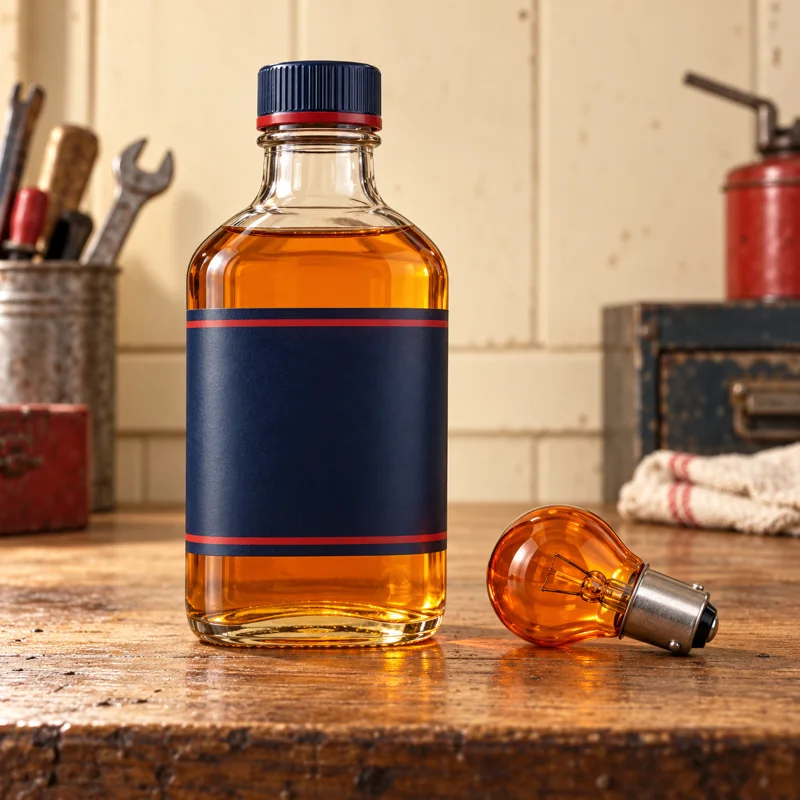
The pictured bottle is fictional artwork. Ordinary packaging is part of the joke: it makes an impossible refill look like a familiar workshop product. It is not a tested maintenance supply.
The reservoir question is a particularly economical comeback. “Where is the filler?” asks for a normal detail of a normal maintenance instruction. If the sender cannot identify a system that actually contains the supply, the missing system becomes the reveal. No vehicle needs to be inspected for the joke.
In an imagined parts-counter exchange, the apprentice can ask whether left and right indicators use different grades, then laugh once the answer is supplied. That is a fictional specification game between people who share the premise, rather than a product recommendation.
Regional reading
You can find this expression in our american new-guy and shop-prank vocabulary. These guides explain recorded names and local vocabulary; they do not claim an exclusive origin or nationwide popularity.
How to recognise it
Consult the actual vehicle handbook if you are unsure. A fluid request with no reservoir, specification or manufacturer instruction is missing more than a shopping list.
Questions about blinker fluid
Is blinker fluid real?
No. Blinker fluid is the imaginary liquid in a turn-signal refill joke. Vehicle indicators do not have a blinker-fluid reservoir. A novelty bottle can use the name, but it does not create a genuine maintenance requirement.
Where do you put blinker fluid?
Nowhere: there is no blinker-fluid filler in this joke. If somebody presents the request as vehicle maintenance, ask for the relevant manufacturer information and the actual component before doing any work.
Can you buy blinker fluid?
You may find joke bottles or novelty listings with those words. They are props, rather than evidence that a car needs the fictional refill. You do not need to buy anything to get the punchline.
Can blinker fluid be used in a short workshop joke?
Yes, as an imaginary-stock reference: “The blinker-fluid shelf has never needed topping up.” Explain that vehicle indicators have no such refill reservoir. The line is original humour, not a maintenance instruction.
What is the answer to a blinker-fluid quiz question?
If the question asks whether vehicle indicators need that refill, the answer is no. A novelty bottle is a joke product; its packaging does not establish a real vehicle consumable.

The line and the comeback
Original spoken examples for downtime, with an immediate answer. Nobody needs to carry out the request.
Blinker fluid
- THE SETUP
- “Is the blinker fluid back in stock?”
- THE REVEAL
- Indicators do not have a blinker-fluid reservoir. The refill is fictional.
- YOUR COMEBACK
- “Yes, but only the non-blinking variety.”
If the request is part of real work
Ask what the item is meant to do and ask for a model, picture or stores reference. Genuine instructions should get a genuine explanation. If you have been sent to search and nobody will clarify the request, stop the errand and ask your supervisor.
How to spot a fake-tool request explains that conversation. The comeback guide gives more ways to end it without escalating.
Original editorial explanation. Reviewed 2026-10-05. Something needs correcting?