
Measure twice, explain once
The board stretcher is a perfect joke name for a trade where dimensions matter. It offers to undo the exact thing a saw has just done. A beginner may want the solution to be real, especially when a senior worker presents it calmly.
The reveal should bring the conversation back to the real plan for the piece. It is not a reason to hide a mistake or experiment with a clamp. The tool belongs in the fictional catalogue; the material belongs to the job’s actual instructions.
Handedness and low trim
Left-handed hammer and paintbrush requests add selection rules to plain tools. Real ergonomic preferences still deserve respect, and unusual designs should be identified by their features. The joke is the unexplained counterpart for an ordinary item, not the person’s dominant hand.
Skirting-board ladder uses height instead of handedness. Translating skirting board as baseboard makes the low-trim absurdity clear to another reader. Actual access and posture decisions remain separate from the wordplay.
The square-hole exception
A hollow-chisel mortiser can make a square-sided opening by combining components in a specific system. That means refusing every square-hole request is as unhelpful as believing every imaginary tool. Ask which machine and cutting system are meant.
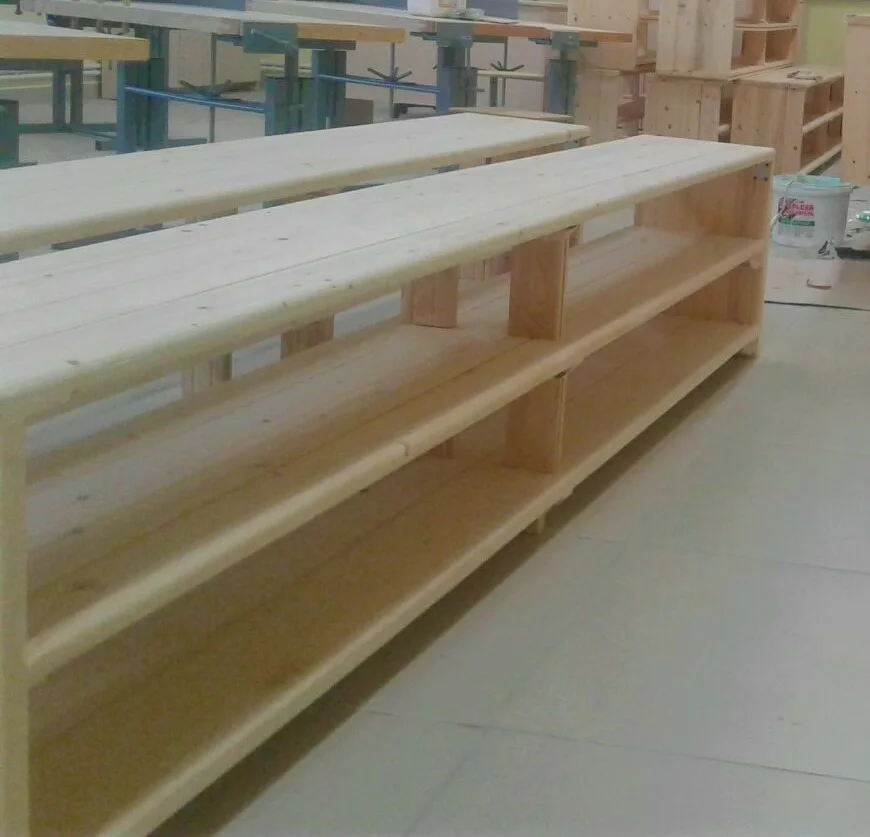
The genuine workshop photograph on this hub shows benches being made. It is an illustration of carpentry work, not evidence that any joke happened there. Its creator and licence are credited beside the image.
Carpentry’s real vocabulary is rich enough without fake lessons. Explain an unfamiliar tool patiently and give the apprentice a formal name they can find again. Then a joke about a board stretcher can remain a quick shared laugh rather than a source of doubt about the next instruction.
The names you might hear here
These examples show how the names work. Follow each entry for alternative names, a suggested line and a comeback.
Board stretcher
A board stretcher that restores missing length to a board cut too short is an apprentice joke. Wood can change dimensions with moisture, but an ordinary workshop tool cannot put the sawn-off material back.
Carpentry gives the prank a ready-made plot: a piece has been measured, sawn and found wanting. The imaginary board stretcher promises to put the missing length back without admitting the cut needs another solution. It is less a tool than a warranty against arithmetic.
The name follows the pattern of real workshop equipment. There are clamps, presses and stretchers in other industries, so a newcomer may imagine a pair of grips and a long screw. The impossibility concerns the promised result, not whether someone could build a convincing-looking contraption.
A useful question: Ask how much length it adds and whether the finished board keeps its section and strength. The increasingly elaborate answer is usually the performance.
Left-handed hammer
The classic left-handed hammer errand asks for a separate handed version of a plain hammer that either hand can hold. Ergonomic designs and genuinely asymmetric tools complicate blanket claims, but they do not make this old setup reliable tool advice.
A senior worker blames a crooked nail or an awkward swing on the “wrong” hammer. That turns a normal learning moment into a technical diagnosis which just happens to require another trip to stores. It is an attractive explanation because it removes the beginner’s worry about technique.
The punchline concerns the ordinary hammer already in front of everyone. Changing hands changes the user, not the basic striking face. Nothing needs to be modified, tested on someone else’s work or used in an unusual way to demonstrate that.
A useful question: Ask for the model or the feature that makes the hammer suitable. “It is for your left hand” is not much of a parts specification.
Skirting-board ladder
The skirting-board ladder is a workshop joke about using a ladder to reach trim close to the floor. “Baseboard ladder” conveys the same idea in language more familiar to many North American readers.
Skirting boards sit along the bottom of a wall. Giving the job a special ladder makes the height requirement wonderfully backwards: the thing being reached is already down where the ladder’s feet would be.
A small step, work platform or access aid can have a real use in a particular task. The gag is the explanation that low trim requires a dedicated tall-access tool. Do not let a joke settle a genuine decision about working posture or access.
A useful question: The clue is the height of the object. Ask what part of the trim is supposed to be out of reach.
Square-hole drill
Tools and specialist systems for making square holes are real. A hollow-chisel mortising setup uses a chisel around an auger; other specialist methods also exist. The classic joke pretends a normal round twist drill alone will magically leave square corners.
The name is a trap for confident disbelief. If you only picture a conventional round bit rotating about its axis, the request sounds impossible. A real mortiser adds another component and a specified process, changing the question.
This is why the machine and tool type matter. An actual square-hole request in a woodworking shop can be sensible, while an unexplained demand to select the square version from a drawer of ordinary twist bits can be the gag.
A useful question: Ask which system makes the square hole. A genuine answer names equipment beyond a normal round twist bit.
Rubber nails
Rubber nails offered for ordinary timber fastening are a fake-material errand. Rubber components and decorative novelty nails can exist; they do not make the joking substitute a suitable structural fastener.
The name combines the familiar shape of a nail with a material that defeats the expected use. Adding a size or asking for outdoor grade gives the apprentice real-looking purchase details while concealing the basic contradiction.
This is not a lesson that every fastener must be metal. Different applications use different materials and joining systems. The joke concerns the casual claim that an ordinary nailing job needs a flexible rubber replacement.
A useful question: Ask what application and specification require them. A real fastener choice should have a genuine technical answer.
Hammer grease
Hammer grease for the swing of an ordinary hand hammer is a joke. Powered hammers and other machinery may need specified lubricants; the plain hand-tool errand imagines a maintenance point that is not there.
Lubrication is such a normal workshop topic that the name almost passes without inspection. The request invents a fault, says the hammer is not swinging smoothly, then offers a substance to fix the alleged mechanism.
Your arm moves the hand hammer. It is not a motorised assembly with bearings and a grease nipple. A real power tool with “hammer” in its name is a different system, and its manufacturer’s maintenance instructions should settle any lubricant question.
A useful question: Ask which mechanism needs lubrication. If the answer is the swing of a plain hammer, you have reached fictional maintenance.
Biscuit joiner
A biscuit joiner is a real woodworking tool for preparing joints that use small joining biscuits. The biscuit is a woodworking component, not food. The unusual name is not evidence that an apprentice has been sent for a fake tool.
The everyday food meaning supplies the initial surprise. A newcomer hears biscuit and imagines a kitchen order, while the person naming the tool means a joinery component. The misunderstanding is linguistic: it does not require a made-up machine, an impossible result or a delayed reveal. A genuine request can sound playful because a familiar word has a technical meaning.
DEWALT identifies the actual biscuit-joiner category. That primary reference establishes the tool; it does not make every item with joiner in its name the same equipment. A plate joiner belongs with this explanation, whereas a request describing another woodworking function should identify that function. Asking which machine and component are intended is more useful than guessing from the food association.
A useful question: Ask whether biscuit refers to the joinery component and request the actual tool reference. A food-related noun can be genuine workshop vocabulary.
Story stick
A story stick is a real woodworking layout reference for recording or transferring positions and dimensions. It is not a talking stick or an imaginary measuring device. The name can be unfamiliar while the requested reference is entirely genuine.
Story here concerns information carried by the reference, not a spoken anecdote that makes the timber longer. Woodpeckers identifies manufactured story-stick layout tools. The existence of that category is the useful answer for a learner who has heard the words but cannot yet picture the item. A familiar noun has acquired a workshop meaning, much as tape does in fish tape.
A particular reference may have a defined layout purpose. The name alone does not say which marks, component or project are intended. That is why “Which reference are we transferring?” helps more than “Is story a joke word?” It asks for the information the request needs, while allowing the unfamiliar name to remain genuine. This page does not provide a marking or cutting procedure.
A useful question: Ask which layout information and physical reference are intended. Requesting a clear explanation is compatible with the tool being real.