- CATALOGUE TYPE
- Fake tools
- TRADE CONTEXT
- Construction, Welder, Warehouse, Engineering
- ALSO ASKED FOR AS
- skyhook, air hook, sky hooks
How the joke works
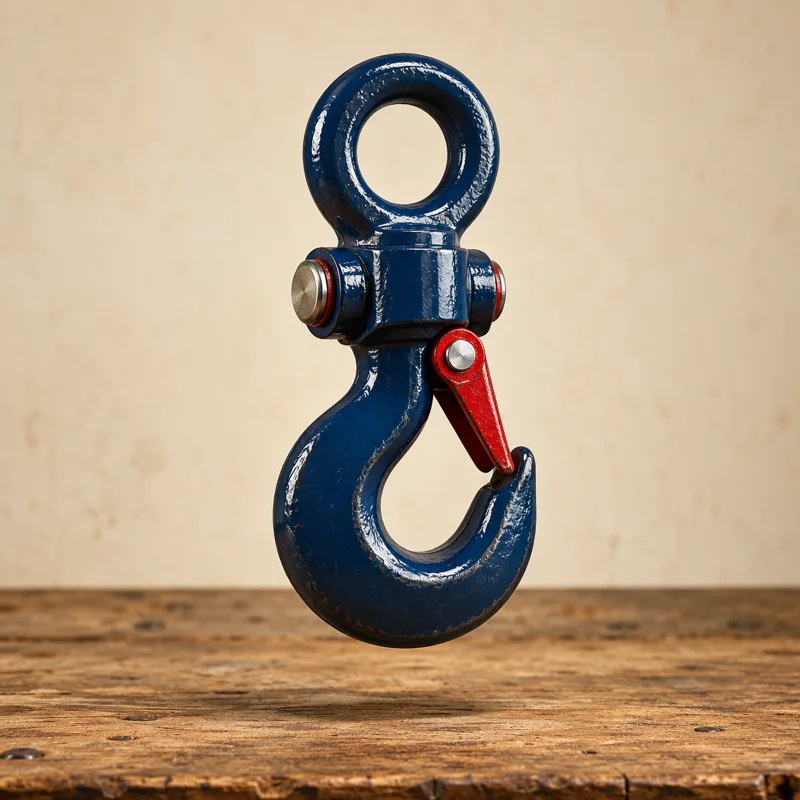
The setup starts with a perfectly reasonable problem: there is no convenient place above the work to hang something. The proposed solution quietly removes the need for an anchor, a frame or any other connection to the world. Gravity is expected to read the purchase order and cooperate.
A believable capacity rating makes the fiction sound industrial. The “larger” sky hook is no more possible than the small one if both float unsupported. A real hoist, crane or lifting aid still transfers its load through a designed support.
Keep the joke at the level of words or an obviously fictional illustration. Lifting equipment, its checks and its instructions deserve literal answers. If a colleague is requesting an actual branded tool, ask for the model rather than dismissing it on the strength of the folklore.
The useful follow-up is not simply whether the name appears in a search result. Ask what supports the load in the claimed version. “Which bit of sky has the mounting holes?” makes the missing connection funny while keeping the entire exchange in language.
A group quiz can mark the unsupported floating hook as fake and the product name as dependent on a real model. That answer is more accurate—and often more amusing—than insisting that either every sky hook exists or every use of the name is imaginary.
How to recognise it
The tell is “hang it from nothing”. A real item with a product name needs a model and an actual support arrangement.
Questions about sky hook
Is a sky hook real?
An unsupported hook hanging in empty sky is the impossible apprentice item. The same phrase can be used in real product names and other contexts. A name match does not establish the unsupported lifting promise.
What is the sky hook prank?
It gives an absent overhead support a convincing hardware name. The reveal concerns where the hook would attach. Keep the example as a spoken puzzle; it requires no lifting task or demonstration.
Does finding a product called Sky Hook settle it?
Only if its specified function matches the actual request. A branded tool has real support and operating requirements. It does not make a hook attached to nothing into genuine workshop equipment.
Does a branded Sky Hook lift float without support?
No. The manufacturer lists real lifting devices with fixed or mobile bases. The folklore version instead promises support from thin air. A genuine product name does not confirm that imaginary function.
Why do sky hook searches show real lifting products?
Sky Hook is also a genuine commercial equipment name. Supported lifting devices differ from the imaginary hook in the apprentice joke. The sky-hook comparison guide explains both meanings.
Should a sky-hook quiz allow a depends answer?
Yes. An unsupported floating hook is the imaginary version. Genuine supported lifting equipment shares the name. A useful quiz states the claimed function and accepts an explanation of the relevant meaning.
What is a short fictional sky-hook catalogue line?
“Mounting point sold separately: the sky” is an original joke about the unsupported version. It is not a description of real Sky Hook equipment, which has physical supports and actual specifications.
The line and the comeback
Original spoken examples for downtime, with an immediate answer. Nobody needs to carry out the request.
Sky hook
- THE SETUP
- “Have we got a sky hook for the part with nothing above it?”
- THE REVEAL
- A sky hook that supports a load from thin air is a joke. Real lifting products use the name Skyhook, so the name alone is not proof of a prank. The imaginary version has no supporting structure at all.
- YOUR COMEBACK
- “Sure. Which bit of sky has the mounting holes?”
If the request is part of real work
Ask what the item is meant to do and ask for a model, picture or stores reference. Genuine instructions should get a genuine explanation. If you have been sent to search and nobody will clarify the request, stop the errand and ask your supervisor.
How to spot a fake-tool request explains that conversation. The comeback guide gives more ways to end it without escalating.
Original editorial explanation. Reviewed 2026-10-05. Something needs correcting?