What is a board stretcher?
A board stretcher in an apprentice joke is a machine supposedly able to make a board longer after it has been cut too short. The impossible repair is the point: the missing wood does not grow back because a stores counter issues a special tool.
The request can sound reasonable to someone still learning unfamiliar equipment. A good explanation identifies the promise, rather than laughing at unfamiliarity. “This one is imaginary; it cannot add the cut-off material back” answers the question. The board-stretcher entry includes a short spoken setup and a comeback.
Is a wire stretcher real?
Yes, in fencing. Rappa lists a wire stretcher used to tension fence wire. That genuine function is different from making an electrical cable that was cut too short become the correct cable for the job.
This is why a simple true-or-false question can be misleading. The same words can name real equipment and appear in a joke about an impossible repair. Ask “What is it meant to do here?” A product photograph can confirm an item exists; it cannot confirm every story about what that item will accomplish.
Why a duct stretcher belongs on the real shelf
Duct stretcher is another name that survives the catalogue check. Malco sells duct stretchers for aligning ductwork during joining. A person hearing the name for the first time might group it with the board-stretcher joke, but that would mistake unfamiliarity for impossibility.
The distinction is the specified function. Aligning edges is different from adding a missing length of material. Our duct-stretcher entry marks the item as real and explains why it is excluded from the random spoken-prank selector. You can enjoy the misleading name while learning the genuine exception.
Pipe and plate: define the promise
Pipe stretcher and plate stretcher appear in apprentice jokes about restoring missing length. In that setup, the pretend tool fixes a measurement or cutting mistake by adding material back. A name alone does not establish the existence of such a repair.
Industrial metal forming, expanding and stretching are real processes. A particular supplier may use overlapping terminology for equipment that changes an existing workpiece within a defined application. That does not validate a universal stores-counter tool which reverses an arbitrary cutting mistake. Ask for a manufacturer, model and intended operation if the request is literal.
Keeping the claim specific also avoids the opposite error: an experienced colleague should not reject a genuine unfamiliar tool because a joke encyclopedia contains similar words. The pipe-stretcher and plate-stretcher entries address the imaginary repair, with that boundary intact.
Compare a function, not just a label
A useful three-column quiz says “name”, “claimed function” and “answer”. Board stretcher, add cut-off wood back, imaginary. Wire stretcher, tension fence wire, real. Wire stretcher, restore missing electrical cable, the joke. Duct stretcher, align duct edges, real.
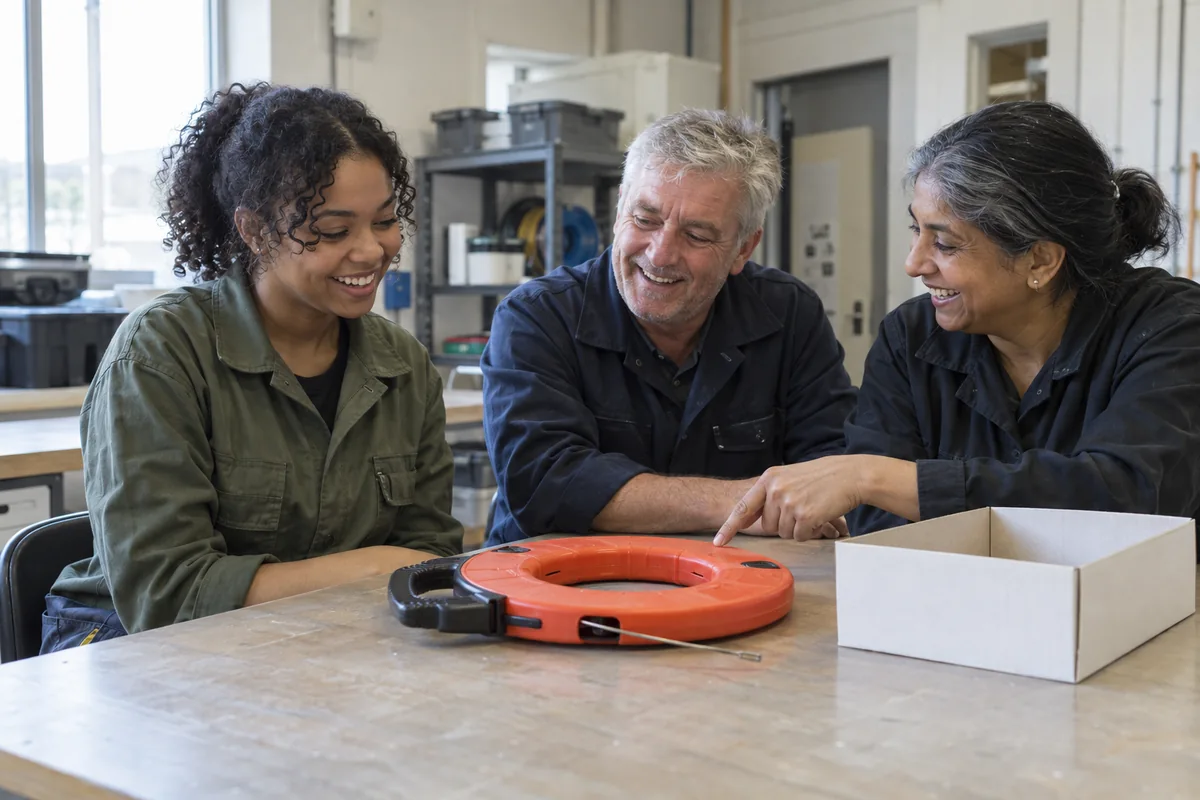
Include at least one genuine example when discussing apprentice tools. It rewards questions and makes experience less important than careful reasoning. For another real name that sounds invented, see fish tape. It is equipment used in cable installation, rather than sticky tape for a fish.
When somebody makes a real work request, finish the word game before starting the task. “Which model and what does it do?” is a normal professional question. For a break-time joke, “I found the real fencing one; the extra-cable feature is missing” catches both meanings without arranging another errand.
Does finding a wire stretcher online settle the request?
A genuine product in another trade may share a nickname or a similar description. Strainrite describes a chain strainer for tensioning fence wire during joining. That product does not establish a way to restore the missing length of cut electrical cable.
Ask “Which type of wire, and what are we doing with it?” Context is more useful than arguing about whether a search result exists. A careful search is a reasonable response to an unfamiliar instruction.
Wire stretcher versus fish tape
A fish tape is genuine electrical equipment used for wire pulling. Klein lists fish tapes among its wire-pulling tools. It is not a device for making a short conductor longer.
“That name sounds silly” is therefore a poor test. Fish tape sounds unusual to a beginner but names a real tool. If a cable is actually too short, explain the situation to the responsible qualified person and ask for the approved next step. The joke is not a repair method.
Worked examples: names and explanations
Quick answers to the names in this guide. Each entry has the full explanation, alternative names and a comeback.
Board stretcher
A board stretcher that restores missing length to a board cut too short is an apprentice joke. Wood can change dimensions with moisture, but an ordinary workshop tool cannot put the sawn-off material back.
A useful question: Ask how much length it adds and whether the finished board keeps its section and strength. The increasingly elaborate answer is usually the performance.
Wire stretcher
A wire stretcher is a real fencing tool. But if an electrician wants one to make a cable cut too short reach a terminal, you are probably being sent on a fool’s errand. A fencing tensioner pulls existing wire taut; it does not manufacture extra cable.
A useful question: Ask for the manufacturer, stores reference or a picture of the actual tool. If the explanation is that it will undo a cutting mistake, the request has acquired imaginary engineering.
Duct stretcher
A duct stretcher is real. In sheet-metal work it can hold or pull duct edges into position for joining. Being sent for one is not automatically an apprentice prank, even if you know the board-stretcher joke.
A useful question: Request a picture or stores code. If the task is duct assembly with an actual stretcher, the name is legitimate.
Original editorial guide. Reviewed 2026-10-05. Corrections are welcome.