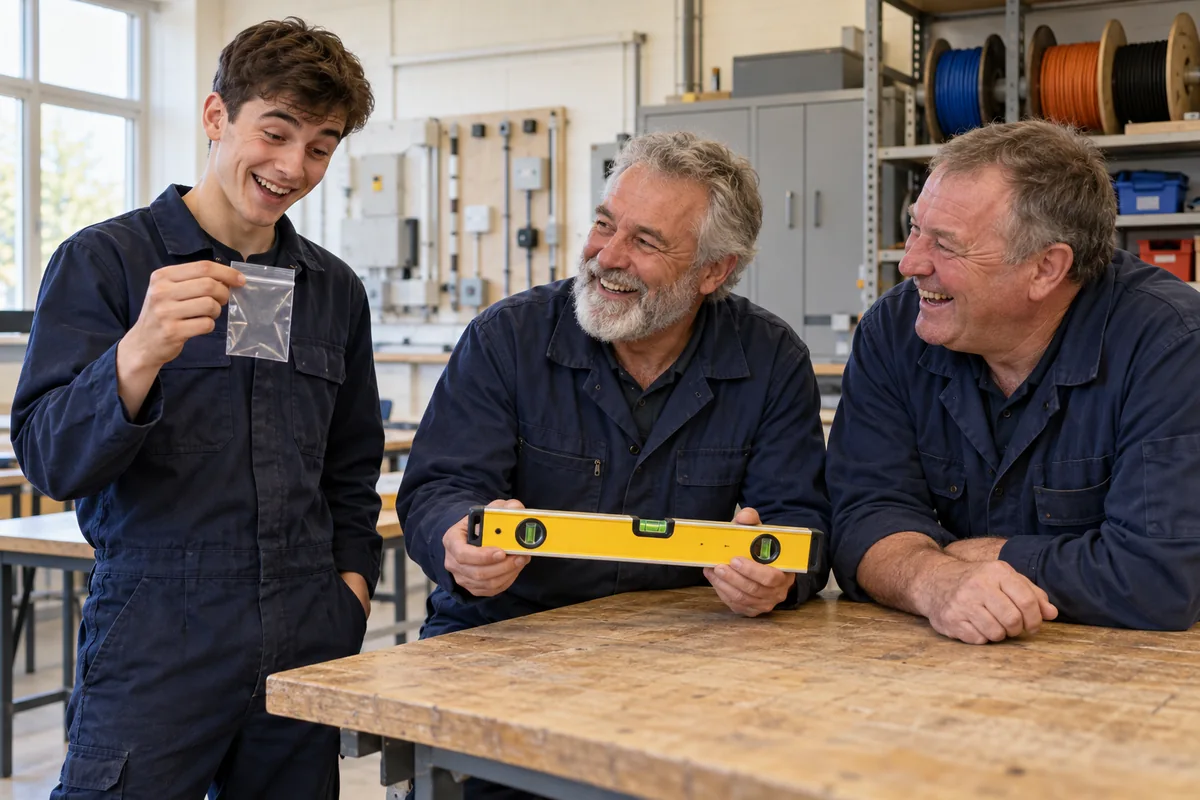
Why a replacement spirit level bubble is a joke
The spirit-level-bubble request treats the empty space inside a vial as a detachable spare part. It sounds like an ordinary maintenance order: a familiar tool, a small component and a replacement. The missing detail is how a loose bubble would be supplied separately from the liquid and container around it.
An original quiz line is “Does stores sell the bubble, or the part that contains it?” The reveal is “The loose bubble is the joke. A real part has an actual tool reference.” That distinction answers the search without claiming that the whole level, every vial or all replacement parts are fictional.
The joke works through an invented separation. Calling the air gap worn out, overdue or the wrong size adds a convincing service story to the same imaginary order. The extra specification does not make the detached bubble a genuine consumable.
Replacement bubble versus replacement vial
A complete vial or assembly is a different object from a loose bubble. Starrett's FAQ for its 98 levels describes obtaining replacement parts. That confirms a genuine service context for specified equipment; it does not mean every level has interchangeable user-replaceable vials.
STABILA's description of spirit-level construction identifies vial liquid and an assembled measuring system. A part name needs to identify that system, not merely the tiny visible gap. If a person means a genuine replacement component, ask for the exact model and maker's part reference.
An original comeback is “I can identify the assembly. The loose space needs a catalogue number.” It keeps the joke in the wording while leaving an actual damaged-tool question with the manufacturer's servicing information. This explanation does not provide a repair or calibration procedure.
Bubble juice, level fluid and a bubble refill
Bubble juice and level fluid are alternate wording grouped on the canonical spirit-level-bubble entry. In the apprentice joke they suggest a refill that will bring back the missing bubble. The fluid inside a real vial is a genuine part of the instrument; naming it does not establish the invented refill request.
That distinction matters when a search returns a technical description rather than the prank explanation. Evidence that liquid exists inside the vial is not evidence that an ordinary level should be opened and topped up. A genuine service enquiry needs the actual level and the maker's instructions.
An original reply is “The level has liquid; the imaginary refill has a story.” Then explain the contrast directly. The catalogue's joke concerns a fictional maintenance supply, rather than a denial that instruments have real components.
Bubble level versus spirit level: does the wording change the joke?
Bubble level and spirit level are wordings for the tool in this conversation. A request for a spare bubble makes the same invented component claim whichever wording the speaker uses. The name of the instrument does not turn its visible gap into separate stock.
Compare an eye measure. That errand turns estimating by sight into a literal instrument to fetch. The spare-bubble joke instead starts with a real instrument and invents a detachable component. Both sound like measurement requests, but their mechanisms differ.
A two-question quiz can ask “Which one invents the instrument, and which invents the spare?” The answers are eye measure and loose replacement bubble. Asking for the reason gives the group more to discuss than a list of fake names.
What to say when asked to fetch a spare bubble
A useful reply is “Do you mean a real vial assembly, or the spare-bubble joke?” It offers both interpretations and lets the person give an immediate answer. If the request is genuine, the model and part reference make it identifiable. If it is a joke, the explanation ends the errand.
An original comeback is “The spare bubble comes with a very important container.” It points toward the actual distinction without suggesting that someone must search several shelves to earn the reveal. Nobody needs to open, tilt or modify an instrument for the name quiz.
For nearby trade examples, read plumber apprentice pranks and pipe expanders or carpenter apprentice jokes. The examples below compare invented components with containers of impossible stock.
Worked examples: names and explanations
Quick answers to the names in this guide. Each entry has the full explanation, alternative names and a comeback.
Spirit-level bubble
You cannot buy a loose replacement bubble to drop into an ordinary spirit level. The bubble is the unfilled space in a sealed liquid-filled vial. Replacement vials exist for some serviceable levels; that is a different and genuine request.
A useful question: Ask whether the supervisor means a complete sealed vial and which model it fits. If the request is specifically for the bubble alone, you have found the joke.
Eye measure
An eye measure in the apprentice joke is an imaginary instrument for a judgement someone is making “by eye”. Measuring tools are real; a casual visual estimate does not become a special stores item because it gets a technical name.
A useful question: Ask whether an estimate or a specified measurement is required. A real tool request should identify the instrument.
Box of holes
Loose holes in a box are a joke about treating an absence as a stocked object. Drilled parts, washers, punches and templates are real. An empty opening cannot be supplied independently of the material around it.
A useful question: Ask “holes in what?” A real stores request should supply a material or a tool, not just a void.
Bucket of steam
Fetching steam in an ordinary open bucket is a fool’s errand. Steam is water vapour, and the familiar white plume is condensed droplets. Neither is a stable bucketful of workshop stock that can be carried back like bolts.
A useful question: If you are told to collect steam, ask whether this is a joke before going near equipment. A genuine task involving steam needs proper instruction.
Original editorial guide. Reviewed 2026-10-05. Corrections are welcome.